Real world use cases of edge Computing With Intel, Affirmed Networks and Telefonica

Thursday, October 4, 2018

Thursday, July 19, 2018
How Telefonica uses AI / ML to connect the unconnected
This presentation details how Telefonica has been using data science to systematically identify and locate the unconnected and to evolve its networks and operations to sustainably bring connectivity to the most parts of Latin America.
The project Internet para Todos is Telefonica's flagship program to connect the unconnected in LatAm. There are today more than 100 million people who live outside of reliable internet connectivity in the Telefonica footprint. The reasons are multiple, ranging from geography, population density and socio-economical conditions.
Fixed and mobile networks have historically been designed for maximum efficiency in dense, urban environments. Deploying these technologies in remote, low density, rural areas is possible but inefficient, which challenges the financial sustainability of the model.
To deliver internet in these environments in a sustainable manner, it is necessary to increase efficiency through systematic cost reduction, investment optimization and targeted deployments.
Systematic optimization necessitates continuous measurement of the financial, operational, technological and organizational data sets.
1.Finding the unconnected
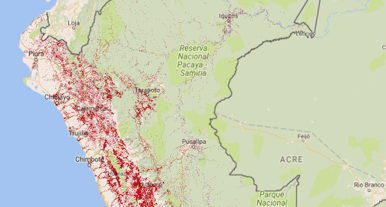
2. Optimizing transport
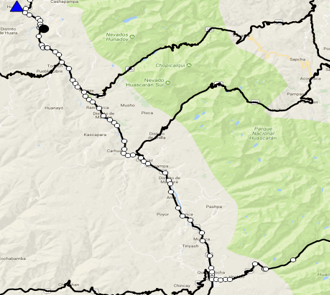
The team started with adding road and infrastructure data to the model form public sources, and used graph generation to cluster population settlements. Graph analysis (shortest path, Steiner tree) yielded population density-optimized transport routes.
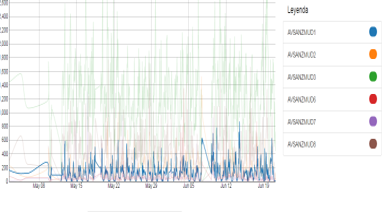
3. AI to optimize network operations
I think that the type of data driven approach to complex problem solving demonstrated in this project is the key to network operators' sustainability in the future.
It is not only a rural problem, it is necessary to increase efficiency and optimize deployment and operations to keep decreasing the costs.
Subscribe to:
Posts (Atom)